
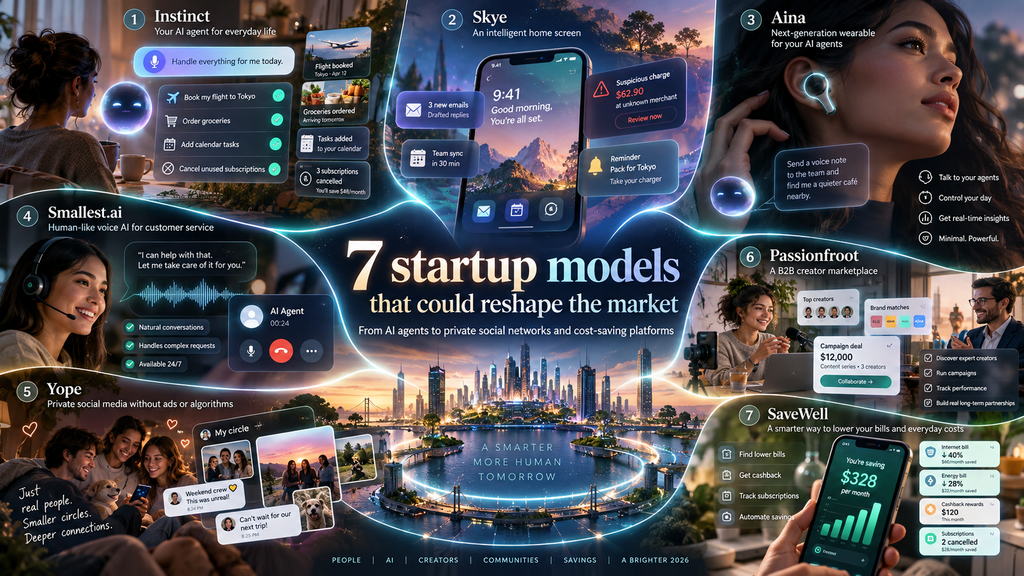
These are not just “AI companies”. They are building new ways to organise daily life, use phones, communicate, work and save money.
1. Instinct — a personal assistant that completes tasks for you
Instinct is designed to do things on your behalf, not just answer questions. Users can connect it to apps and devices and communicate with it by text or calls. Early users have reportedly used it to plan road trips, buy groceries and concert tickets, cancel subscriptions and even help organise a wedding. The company has raised $350 million in total funding and reached a reported $2.5 billion valuation. TechCrunch
Why would someone use it? To reduce everyday admin. Instead of opening several apps, you give Instinct the result you want and it tries to complete the steps for you.
Main problem: privacy. The more useful the assistant becomes, the more access it may need to personal accounts and information. TechCrunch
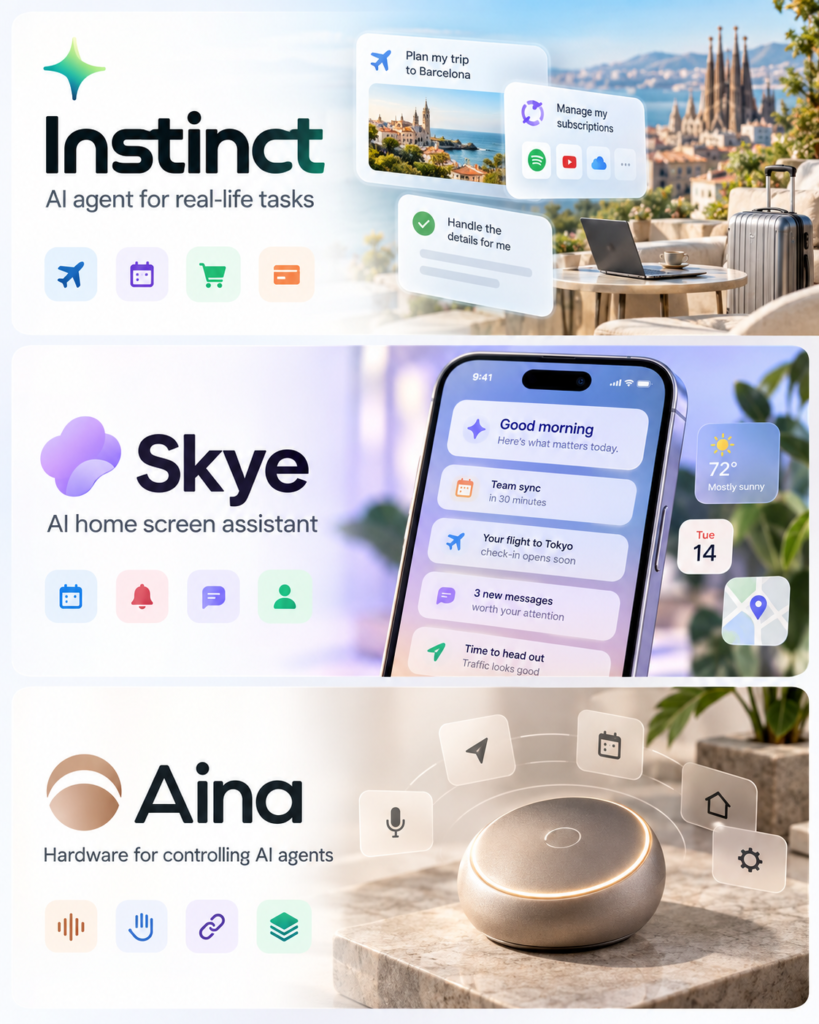
2. Skye — a home screen that tells you what needs attention
Skye is an iPhone app in private testing that is trying to turn the home screen into an intelligent dashboard. Using widgets, it can surface information about context, weather and health, draft email replies, help with meeting preparation, send reminders and flag suspicious bank charges. TechCrunch
Why would someone use it? Because instead of opening five different apps to check what is happening, the important information comes directly to the home screen.
What is different? The home screen stops being just a collection of icons and becomes a proactive layer above other apps.
3. Aina — physical controls for digital tasks
Aina is developing hardware that can trigger digital actions and agents. One prototype, Shift, is a single-tap button that can launch a repeated task. Another, Radiance, is a tabletop remote for video calls with controls for volume, microphone, camera, joining meetings and other functions. Aina found its Dune prototype was the most popular in early testing and plans to use what it learns from these devices to shape future products. TechCrunch
Why would someone use it? To perform repeated digital actions without opening a phone or navigating through several menus.
Simple example: instead of opening multiple tools before a video meeting, you could press one physical control and trigger the setup.
4. Smallest.ai — automated phone conversations for businesses
Smallest.ai is building specialised voice models for real-time conversations. The company wants its systems to listen, process information and respond with very little delay, making automated conversations feel more natural. It has raised $13 million in Series A funding, bringing total funding to more than $21 million. TechCrunch
Why would a business use it? To automate routine phone work such as customer support, appointment handling and basic enquiries.
What is the potential impact? Companies could handle more calls without increasing a traditional call-centre team at the same rate.
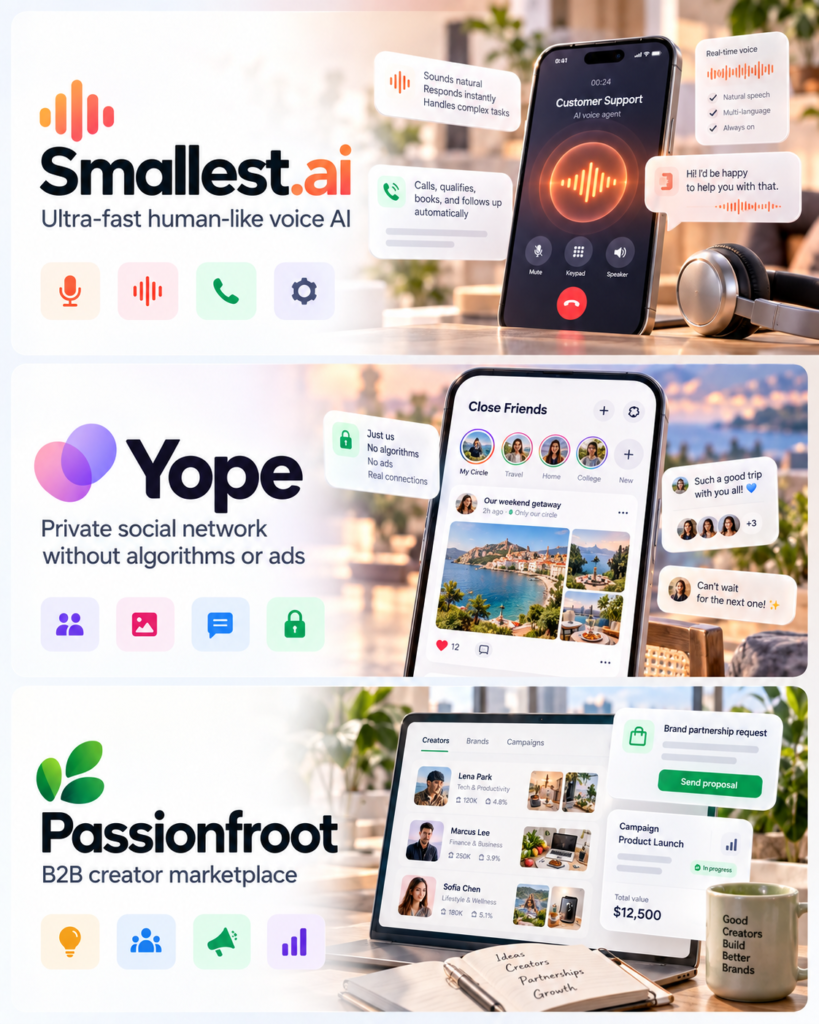
5. Yope — social media for small private groups
Yope is building a social network around private “micro communities” rather than public feeds. Users share photos, videos and messages with friends and family. Accounts are private by default, there is no algorithmic feed and the company is not relying on advertising; instead, it is developing a premium subscription model. Yope has nearly 15 million registered users and raised $12.3 million in its latest round. TechCrunch
Why would someone use it? Because not everyone wants to post publicly or build an audience. Yope is designed more like a private social space for people you actually know.
What is different? Its business model does not depend on keeping users scrolling just to display more ads.
6. Passionfroot — a marketplace for experts and brands
Passionfroot connects B2B creators with companies that want to reach specialist audiences. These creators can include newsletter writers, analysts, podcasters and industry experts. Brands can use the platform to find creators, run campaigns, make payments and track results. Passionfroot raised $15 million in a Series A round and says it has worked with companies including Figma, Replit, Framer, Gamma and ElevenLabs. TechCrunch
Why would a company use it? Because a trusted expert with a smaller but highly relevant audience can sometimes be more valuable than a mainstream influencer with millions of followers.
What could it change? B2B marketing could move further away from traditional ads and toward expert-led creator marketing.
7. Nobile Mobile — a business model built around helping customers spend less
Andrew Yang has argued that a new category of startups could succeed by reducing the cost of essential services rather than extracting more money from customers. His company Nobile Mobile applies that idea to wireless service: it aims to provide cheaper mobile service and give customers money back if they use less data. TechCrunch

Why would someone use it? Because the benefit is immediately understandable: lower monthly costs and potentially money back for using less.
Why is the model interesting? Most subscription businesses try to increase revenue per customer. This one asks the opposite question: how much money can we help the customer keep?
The same idea could potentially be applied to housing, food, transport, medicine, energy and other essential services. TechCrunch
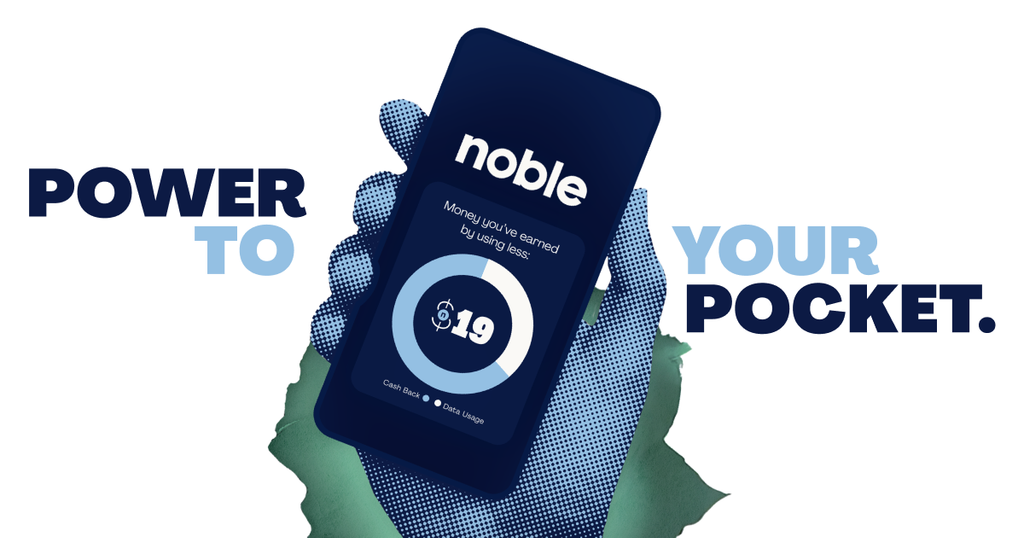
TechCrunch – Lowering the cost of living
What connects all seven?
They are trying to remove friction from something people already do.
Instinct removes repetitive admin. Skye reduces app switching. Aina moves some digital actions into physical controls. Smallest.ai automates routine phone conversations. Yope removes the pressure of public social media. Passionfroot simplifies B2B creator marketing. Nobile Mobile tries to reduce what customers spend.
That is what makes these startups interesting.
The product does not have to be revolutionary because it contains the newest technology.
It becomes potentially disruptive when it makes an existing task simpler, cheaper or unnecessary.