
ARTICLE CATEGORIES

Business Theory

Theories reviewing employee wellbeing, workplace culture, reward systems, career development and retention. It can also help organisations identify wellbeing condition of the company.

PESTLE Analysis: What Can Change Around Your Business Even If You Change Nothing?

A business can make good internal decisions and still be affected by events completely outside its control. Interest rates change, customer behaviour shifts, new technology appears, regulations are introduced and environmental pressures influence costs and expectations. PESTLE analysis helps businesses examine these external forces before they become operational problems or missed opportunities. PESTLE stands for

PESTLE Analysis: What Can Change Around Your Business Even If You Change Nothing? Read More »

Porter’s Five Forces: How Competitive Pressure Shapes a Business

A business does not compete only with companies selling the same product. Its profitability can also be affected by suppliers, customers, new competitors and alternative products that solve the same problem in a different way. Michael Porter’s Five Forces framework was designed to help businesses look at this wider competitive environment and understand where pressure

Porter’s Five Forces: How Competitive Pressure Shapes a Business Read More »

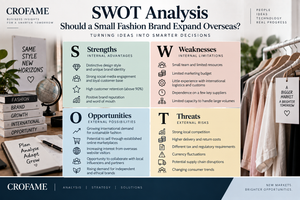
How SWOT Analysis Helps Businesses Make Better Decisions

SWOT analysis is one of the simplest strategic tools a business can use to understand its position before making an important decision. It looks at four areas: Strengths, Weaknesses, Opportunities and Threats. Strengths and weaknesses are internal factors the business can influence, while opportunities and threats come from the external environment. Used properly, SWOT helps

How SWOT Analysis Helps Businesses Make Better Decisions Read More »

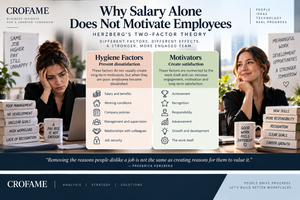
Why Salary Alone Does Not Motivate Employees: Herzberg’s Two-Factor Theory

A pay rise can make an employee happier, but it does not automatically make the job more interesting, improve a poor manager or create opportunities for development. This is the central idea behind Herzberg’s Two-Factor Theory, one of the best-known theories of workplace motivation. Frederick Herzberg argued that the factors causing dissatisfaction at work are

Why Salary Alone Does Not Motivate Employees: Herzberg’s Two-Factor Theory Read More »

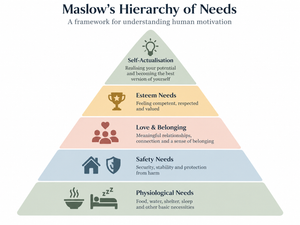
Work-Life Balance Is Not a Luxury: What Maslow’s Hierarchy Can Teach Us About Sustainable Performance

Modern working life often rewards visible productivity. Long hours, constant availability and packed schedules can create the impression that someone is highly committed and successful. But productivity is difficult to sustain when sleep, health, relationships, financial security or basic recovery are continually neglected. This is where the idea of self-care becomes more useful than it

Work-Life Balance Is Not a Luxury: What Maslow’s Hierarchy Can Teach Us About Sustainable Performance Read More »

Shopping Cart